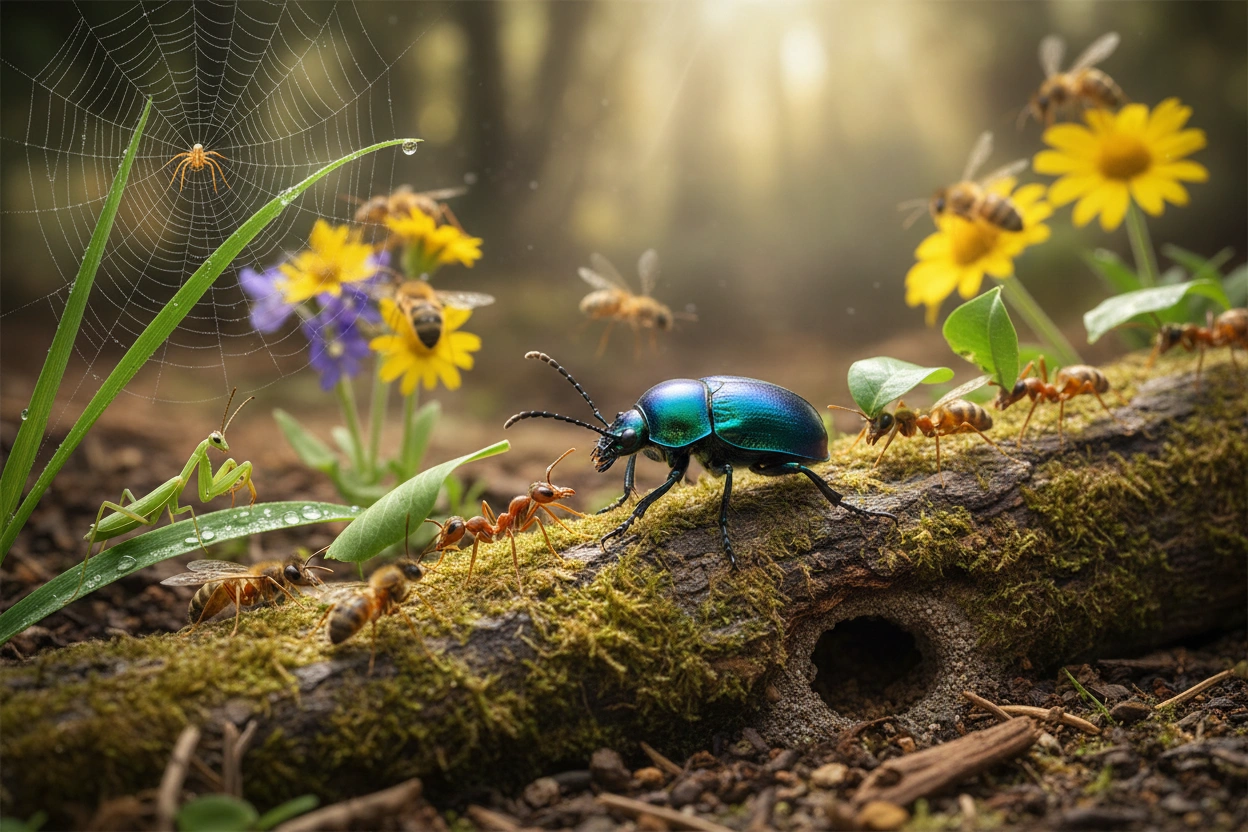
Insects represent one of the most diverse groups of organisms on Earth, with over a million identified species and countless more yet to be described. Their behaviors are as varied as their forms, influencing ecosystems, agriculture, and even human health. Understanding these behavior patterns is crucial not only for entomologists but also for anyone interested in the natural world. This guide delves into the fascinating realm of insect behavior, providing practical insights into insect species identification and highlighting the top ten most captivating insect species that showcase the incredible diversity of this animal kingdom.

Insects are pivotal to maintaining ecological balance. They serve as pollinators, decomposers, and food sources for other animals, thus playing critical roles in food webs. Their behavior patterns can reveal much about environmental health and changes, making them valuable indicators of ecosystem stability. Moreover, understanding how insects behave can help in managing pest populations and enhancing agricultural productivity, ultimately benefiting human societies.
By studying insect behavior, we gain insights into their mating rituals, foraging strategies, social structures, and survival mechanisms. Such knowledge can also help debunk common misconceptions, such as the belief that all insects are harmful or that they lack complex social behaviors. In reality, many insect species exhibit sophisticated communication and cooperation methods, which are worth exploring further.
Insect behaviors can be broadly categorized into several types:
Understanding these behaviors can enhance our appreciation for insects and inform practical applications in agriculture, pest control, and conservation efforts.

Identifying insect species is a fundamental aspect of entomology that allows researchers and enthusiasts to understand better the roles these organisms play in their environments. Proper insect species identification involves several key steps:
Several tools and resources can assist in insect species identification:
By mastering these identification techniques, one can contribute to citizen science initiatives and enhance their understanding of local biodiversity.
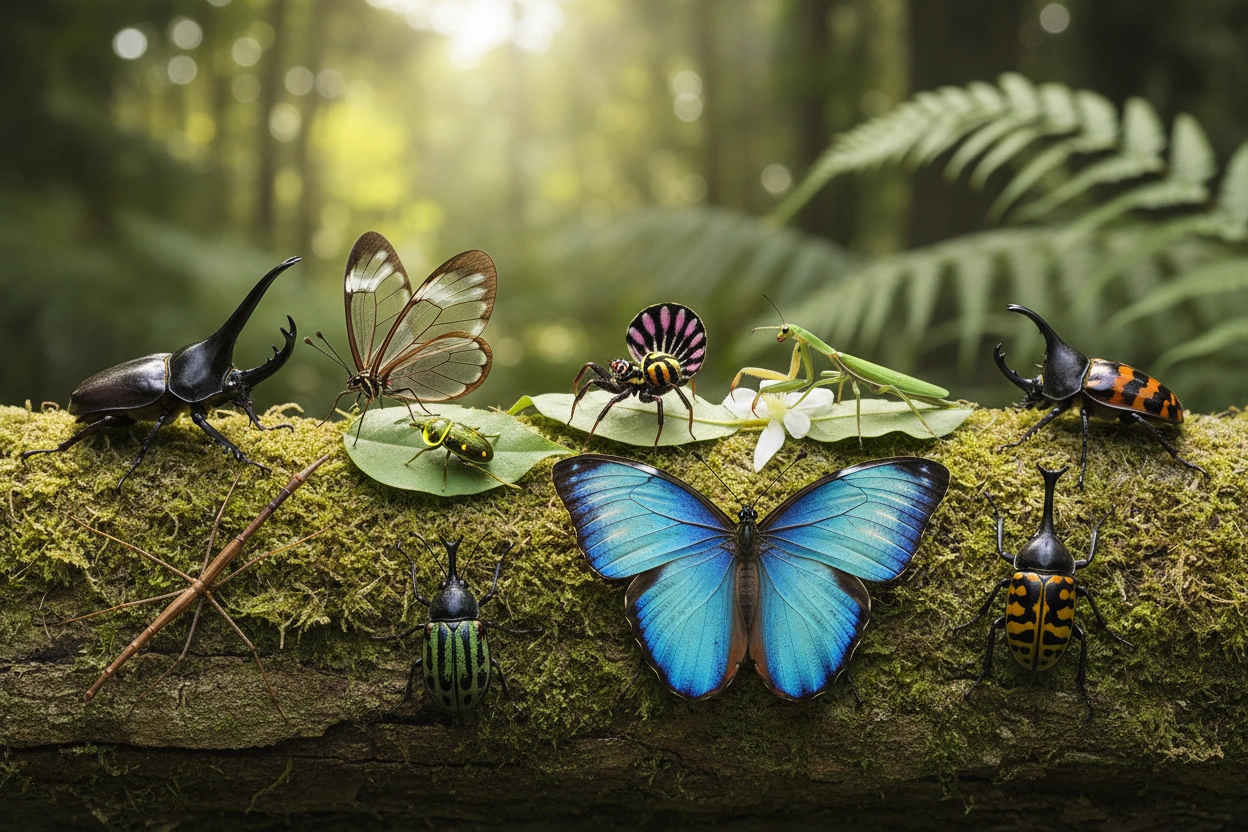
Insects exhibit a remarkable range of adaptations and behaviors. Here are ten of the most fascinating insect species that illustrate the incredible diversity found within this class of animals:
Monarch butterflies are renowned for their long migratory patterns, traveling thousands of miles from North America to central Mexico. Their migration is a complex behavior influenced by environmental cues, showcasing their remarkable navigational abilities.
This beetle is famous for its unique defense mechanism, which involves ejecting a hot, noxious chemical spray at predators. This behavior is a fascinating example of chemical warfare in the insect world.
Leafcutter ants engage in a complex social structure, where they cut leaves and transport them back to their nests to cultivate fungus, which serves as their primary food source. Their cooperative behavior exemplifies advanced social organization among insects.
Fireflies are known for their bioluminescent abilities, which they use to attract mates and communicate. The patterns of light they produce are highly species-specific, demonstrating intricate mating behaviors.
The praying mantis is famous for its predatory skills and unique mating rituals, where females often consume their male partners post-mating. This behavior raises interesting questions about sexual selection and survival strategies.
Honeybees exhibit complex social behaviors, including intricate communication through dances to convey information about food sources. Their role in pollination is crucial for many crops, highlighting their importance to agriculture.
As one of the largest insects on Earth, the Goliath beetle showcases impressive physical adaptations. Males display elaborate courtship behaviors to attract females, emphasizing the diversity of mating strategies.
Cicadas are known for their unique life cycles, with some species emerging only after years underground. Their loud mating calls are a hallmark of summer, demonstrating their significant role in ecosystems.
Dragonflies are exceptional predators, capable of remarkable aerial maneuvers. Their hunting techniques are sophisticated, showcasing agility and precision in capturing prey.
These insects are masters of camouflage, mimicking twigs and branches to avoid detection. Their defensive behavior highlights the evolutionary adaptations insects have developed to survive.
Insect behavior is often misunderstood, leading to several common misconceptions. Addressing these can enhance our appreciation for these remarkable creatures.
Many people perceive insects solely as pests, overlooking their ecological roles. Insects such as bees, butterflies, and beetles contribute significantly to pollination and soil health, underscoring their importance in ecosystems.
While insects may appear simple, they exhibit complex behaviors and social structures. Social insects like bees and ants demonstrate advanced communication and cooperation, challenging the notion of simplicity in their behavior.
While some insects can be harmful, many are beneficial to humans. For instance, insects play critical roles in agriculture, and their contributions to ecosystems outweigh the negatives.
Although many insects have short lifespans, some species, like the queen termite, can live for decades. Understanding the diversity of lifespans among insects can change perceptions about their biology.
Observing insect behavior can be a rewarding experience. Here are some practical tips to enhance your insect-watching endeavors:
Insects play vital roles in ecosystems, contributing to pollination, decomposition, and nutrient cycling. Understanding their behaviors helps us appreciate their contributions and the need for conservation efforts.
Insects, particularly bees, are essential for the pollination of many flowering plants. This process is crucial for food production, making insects indispensable to agriculture.
Insects like beetles and ants contribute to the breakdown of organic matter, returning nutrients to the soil and promoting plant growth. Their role in decomposition is vital for ecosystem health.
Insects serve as indicators of environmental health. Changes in insect populations can signal shifts in ecosystems, prompting further investigation and conservation measures.
Insects are an integral part of our world, and understanding their behaviors can enhance our appreciation of biodiversity. By learning about different insect species and their roles, we can foster a greater respect for these creatures and their contributions to our ecosystems.
To promote insect conservation, individuals can take several actions:
Insects are not just fascinating in their diversity and behavior; they are also crucial for maintaining ecological balance. As we explore the intricate world of insects, organizations like the Banana Slug Club play an essential role in educating the public about these creatures and their importance. The Banana Slug Club provides resources and community engagement opportunities to deepen our understanding of insects and promote conservation efforts.
By embracing the knowledge gained from understanding insect behavior patterns, individuals can contribute positively to environmental health and sustainability. The Banana Slug Club encourages everyone to explore the world of insects, whether through observation, education, or conservation actions.
If you are passionate about learning more about insects and contributing to their conservation, consider reaching out to the Banana Slug Club. They offer a wealth of resources and community initiatives aimed at fostering a deeper connection with nature.
Visit Banana Slug Club to learn more about how you can get involved and support insect conservation efforts in your community.
Get free resources, early access to new features and updates.
No spam. Just fun educational emails!


.svg)
.svg)