The Ice Age represents one of the most significant periods in Earth's history, characterized by drastic climatic changes that shaped the evolution of prehistoric animals. These ancient wildlife species developed unique adaptations of prehistoric animals to survive in harsh, frigid conditions. Understanding how these animals thrived in such environments not only provides insight into their biology and behavior but also helps us comprehend the broader patterns of evolution and extinction. This article delves into the fascinating adaptations of prehistoric animals during the Ice Age, and highlights ten remarkable extinct species that capture the imagination.
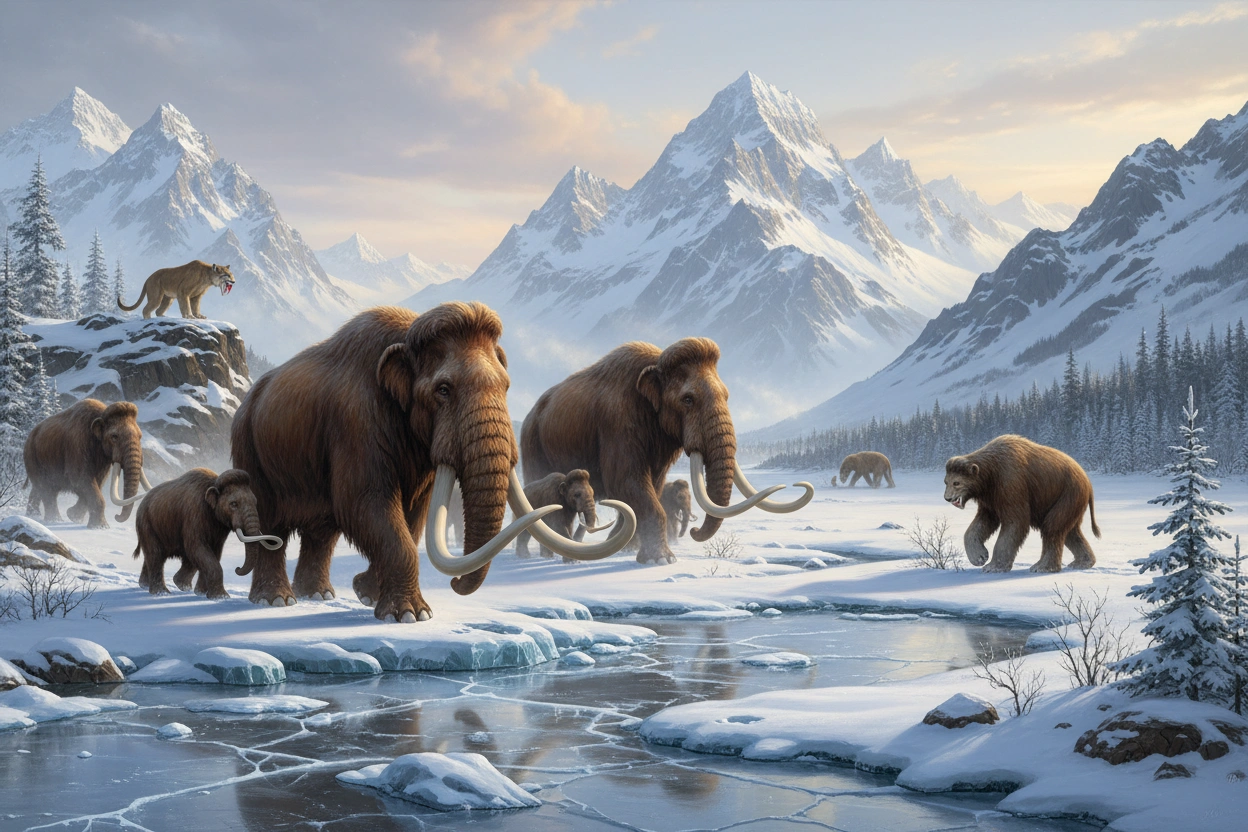
The Ice Age, often referred to as the Quaternary glaciation, began approximately 2.58 million years ago and continues to influence the Earth's climate. This era was marked by repeated glacial cycles, during which vast ice sheets expanded across North America, Europe, and Asia, creating a range of environments from tundra to glacial landscapes.
During this period, prehistoric animals adapted in extraordinary ways to cope with the severe cold and limited food resources. Their adaptations can be categorized into physiological, behavioral, and morphological changes that allowed them to thrive in an unforgiving world.
Physiological Adaptations
Prehistoric animals developed specific bodily functions to regulate their temperature and conserve energy. For instance, many species evolved a thicker layer of fat and fur, which provided insulation against the cold. Woolly mammoths, for example, had a double coat made of long, coarse outer hair and a shorter, dense undercoat that trapped heat.
Behavioral Adaptations
Behavior played a crucial role in survival during the Ice Age. Animals often migrated to warmer areas during extreme cold periods, seeking food and more hospitable environments. Social behaviors, such as forming herds, also provided protection against predators and increased the chances of survival.
Morphological Adaptations
The physical characteristics of prehistoric animals were also influenced by their environments. Many animals developed larger body sizes, known as the Allen's rule, which helps conserve heat. For example, the short-faced bear, one of the largest terrestrial carnivores of the Ice Age, had a robust build that allowed it to hunt efficiently in cold climates.

Understanding specific prehistoric animals provides a clearer picture of how life adapted to the Ice Age. Here are ten remarkable extinct species that showcase the diversity and ingenuity of ancient wildlife. fascinating facts about prehistoric animals.
The woolly mammoth is perhaps the most iconic Ice Age animal. Standing about 13 feet tall and weighing up to 6 tons, these massive creatures roamed the tundras of Europe, Asia, and North America. Their long, curved tusks were used for foraging and fighting, while their thick fur helped them withstand freezing temperatures.
Often mistakenly referred to as saber-toothed tigers, these formidable predators possessed elongated canine teeth that could reach up to 8 inches in length. They were adapted for ambush hunting, utilizing their strength and speed to take down large prey. Smilodon lived in packs, which enhanced their hunting success.
Similar in appearance to the woolly mammoth, the mastodon had a stockier build and shorter tusks. Their teeth were adapted for grinding down leaves and branches, which made them well-suited for a diet consisting primarily of forest vegetation. Mastodons inhabited North America and were known to migrate seasonally.
This enormous ground sloth could grow up to 20 feet long and weighed over a ton. Megatherium was a herbivore that used its powerful claws to reach high vegetation. Its adaptations included a slow metabolism, which was advantageous in an environment where food could be scarce.
The woolly rhinoceros was equipped with a thick, shaggy coat and a large, curved horn, which it likely used for defense and foraging. These animals were well-adapted to cold climates and primarily grazed on tough grasses and shrubs, demonstrating a unique adaptation to their environment.
The Irish elk is notable for its enormous antlers, which could span up to 12 feet. This species inhabited the woodlands and grasslands of Europe and Asia. The large antlers may have been used for display during mating rituals, showcasing the importance of sexual selection in adaptation.
As one of the largest bear species to ever exist, the short-faced bear was highly adapted for speed and agility. Its long legs and lean body structure allowed it to cover vast distances in search of food. This species likely hunted large prey and scavenged for carrion.
Diprotodon was the largest known marsupial and lived in Australia during the Pleistocene epoch. It had a massive body, similar to that of a rhinoceros, and adapted to a herbivorous diet. Its large size may have helped it avoid predation from smaller carnivorous species.
Although it became extinct in the 20th century, the thylacine is often included in discussions of prehistoric wildlife due to its unique adaptations. This carnivorous marsupial had a slender body and was known for its striped back, which provided camouflage in the dense forests of Tasmania.
This gigantic hornless rhinoceros is considered one of the largest land mammals to have ever existed. It lived in the late Eocene to early Miocene epochs and could reach heights of over 16 feet. Its long neck allowed it to reach high foliage, showcasing an adaptation that facilitated feeding in a competitive environment.

Adaptations among prehistoric animals were not merely responses to environmental stressors; they were crucial for survival and reproduction. The ability to adjust to changing climates, food availability, and predation pressures enabled these species to thrive in diverse ecosystems. survived extreme climates.
The extinction of many prehistoric animals can be attributed to several factors, including climate change, habitat loss, and human activity. As the Earth warmed following the last Ice Age, many species could not adapt quickly enough to the changing conditions, leading to their decline and eventual extinction.
The study of prehistoric animals provides valuable insights into current biodiversity and conservation efforts. Understanding how ancient wildlife adapted to extreme conditions helps inform modern strategies for protecting endangered species facing climate change. The evolutionary principles observed in these adaptations can guide conservationists in developing effective management plans.
Prehistoric animals continue to captivate our imagination and inspire scientific inquiry. Their adaptations not only demonstrate the resilience of life but also serve as a reminder of the fragility of ecosystems. As we face new environmental challenges, the lessons learned from these ancient species can aid in shaping our approaches to conservation and sustainability.
In conclusion, the adaptations of prehistoric animals during the Ice Age provide a fascinating glimpse into the resilience and ingenuity of life on Earth. Each extinct species tells a story of survival, offering insights into the evolutionary processes that have shaped our planet.
The Banana Slug Club is dedicated to fostering a deeper understanding of ancient wildlife and promoting conservation efforts for present-day species. By learning about the remarkable adaptations of these prehistoric animals, we can appreciate the importance of biodiversity and work together to protect our planet's future.
To explore more about prehistoric animals and how you can contribute to conservation efforts, visit Banana Slug Club. Together, we can learn from the past to create a sustainable future for all living beings.
Get free resources, early access to new features and updates.
No spam. Just fun educational emails!


.svg)
.svg)