.svg)


We're working on this quiz!
Come back soon to test your knowledge about the
Come back soon to test your knowledge about the
Dolphin
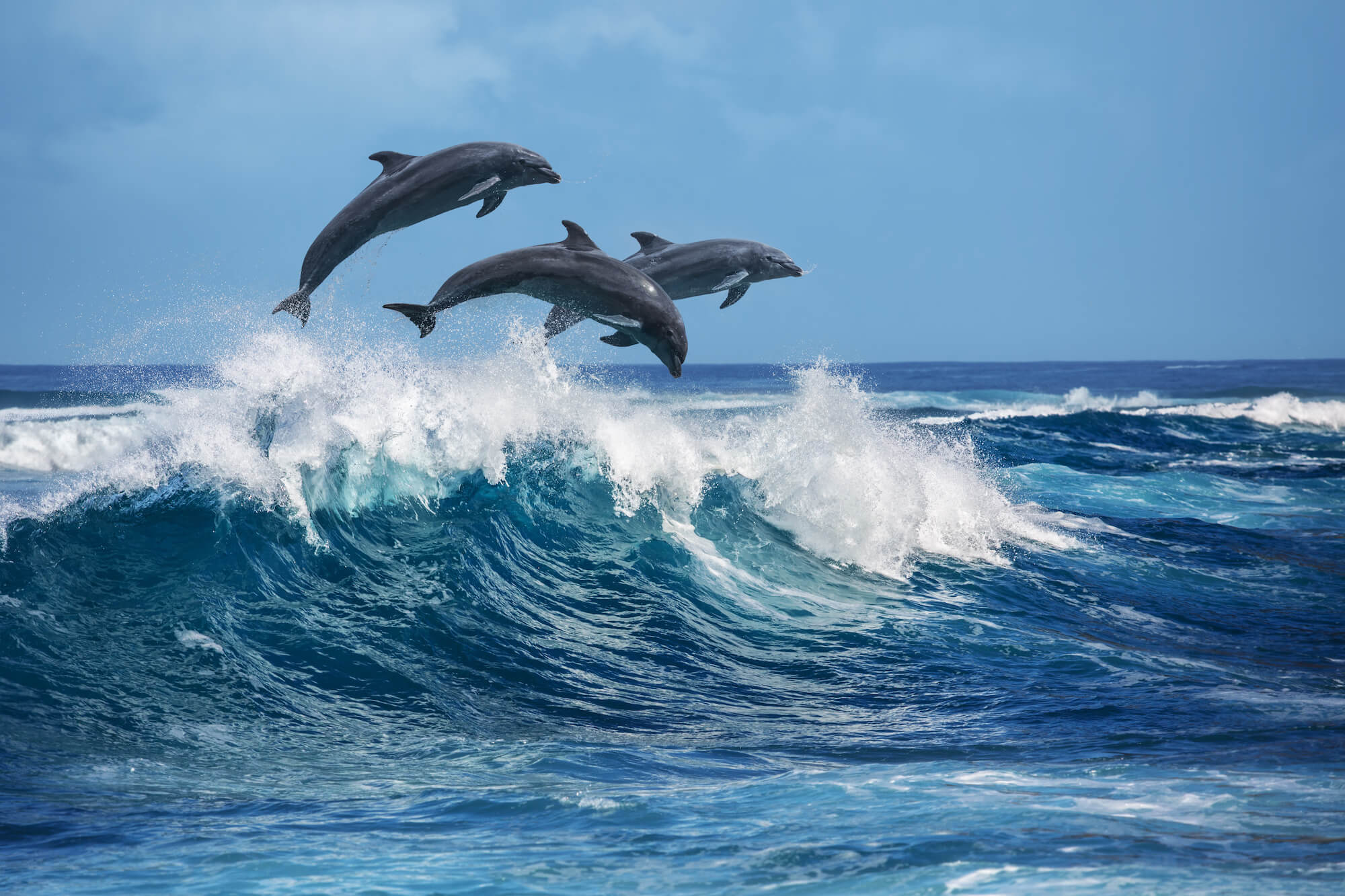

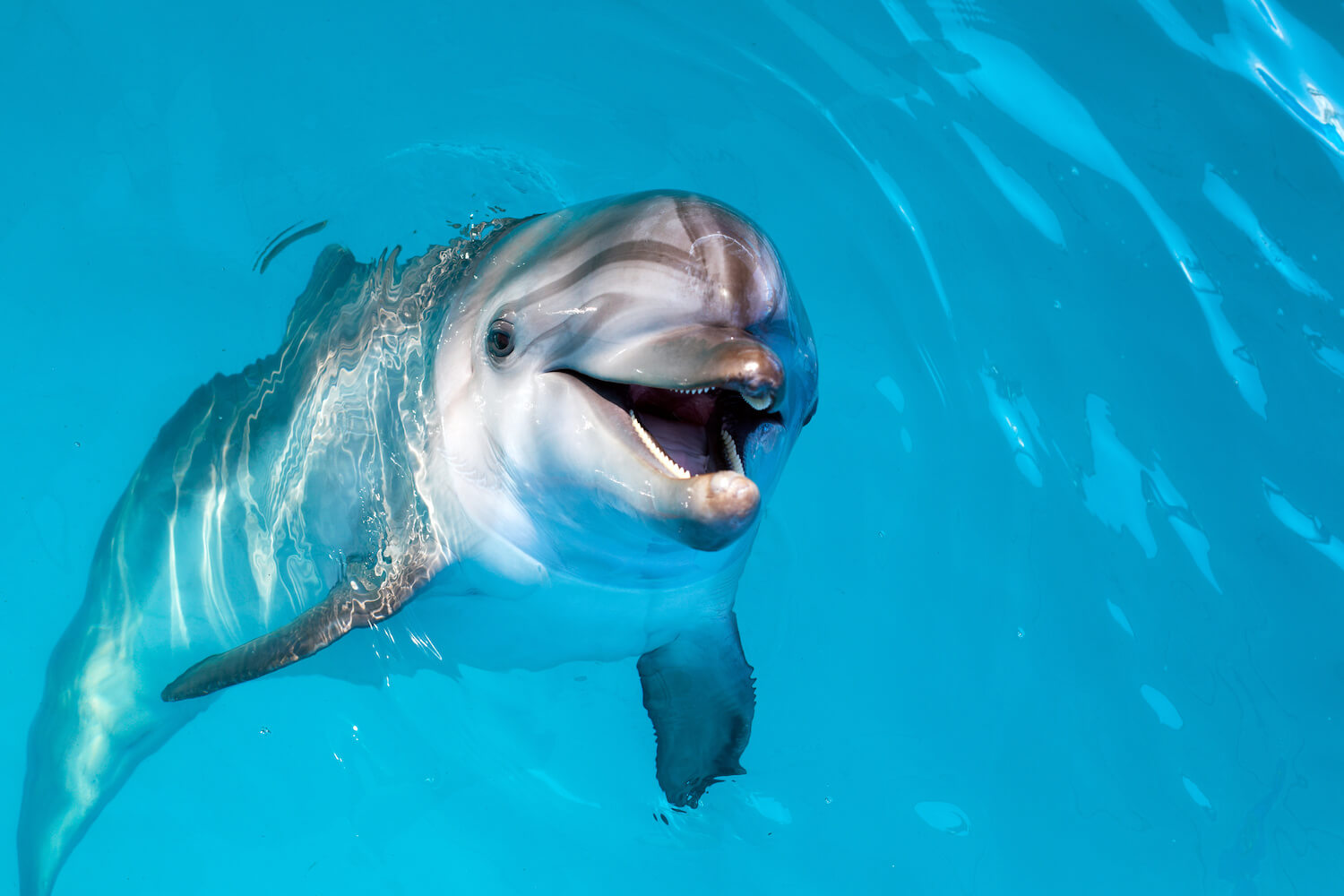

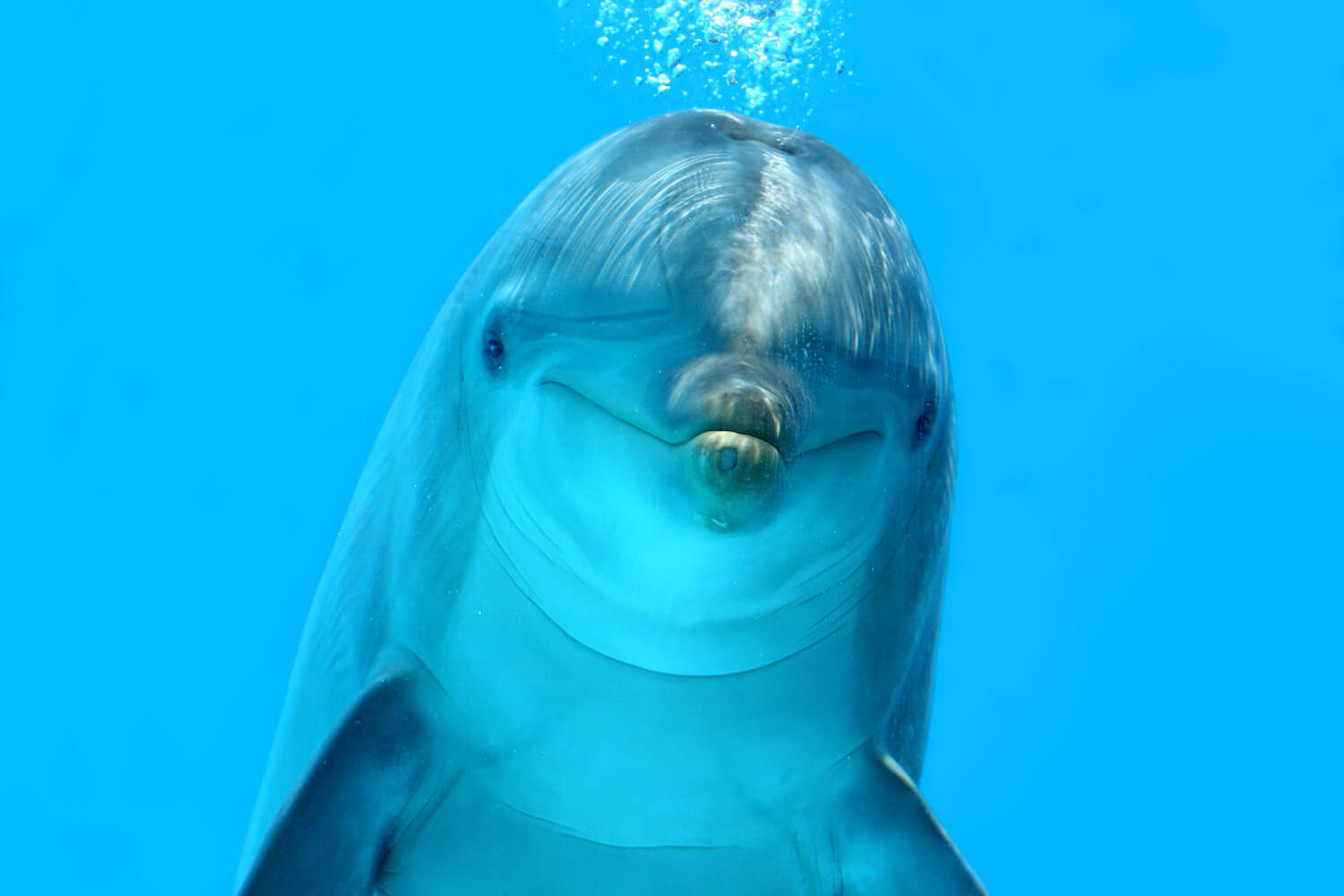
Dolphins are carnivores that primarily eat fish like herring, mackerel, cod, and mullet. They also eat squid, shrimp, and octopus. Dolphins are cooperative hunters that work together in their pods to catch food. They use clever tactics like herding schools of fish into tight balls, taking turns eating while others keep the fish contained. Some dolphins chase fish onto muddy banks and then slide up onto shore to grab them! Dolphins use their sharp, cone-shaped teeth to grab prey, but they swallow fish whole without chewing. An adult dolphin can eat 15-30 pounds of fish per day.
Dolphins are marine mammals belonging to the family Delphinidae, and they're among the most intelligent and social animals on the planet. Bottlenose dolphins, the most recognizable species, typically grow 6-12 feet long and weigh 300-650 pounds. They have smooth, rubbery gray skin, a distinctive curved dorsal fin on their back, and a beak-like snout called a rostrum. Their streamlined, torpedo-shaped bodies are perfectly designed for cutting through water at impressive speeds.
What truly sets dolphins apart is their extraordinary intelligence and complex social behavior. They communicate using a sophisticated system of clicks, whistles, and body language. Each dolphin develops a unique signature whistle early in life that other dolphins use to identify them - essentially giving each dolphin its own name. They live in tight-knit family groups called pods, where they cooperate in hunting, protect each other from predators like sharks, and even appear to play games together. Young dolphins stay with their mothers for 3-6 years, learning essential survival skills.
Dolphins must surface regularly to breathe air through their blowhole, which is like a nostril on top of their head. They're incredibly acrobatic, often leaping, spinning, and riding waves created by boats - behavior scientists believe serves purposes from communication to removing parasites to pure enjoyment. Sadly, many dolphin species face threats from pollution, fishing net entanglement, habitat loss, and climate change affecting their food sources. Conservation efforts are crucial to protecting these remarkable animals that have captured human imagination for thousands of years.
.webp)
.jpeg)
.jpeg)
.jpeg)


.jpeg)


.jpeg)
.jpg)
.jpeg)
.jpg)
.jpeg)


.jpg)
.jpg)


.jpg)
.jpg)
.jpg)

.jpeg)
.jpg)
.jpg)
.jpg)
.jpg)

