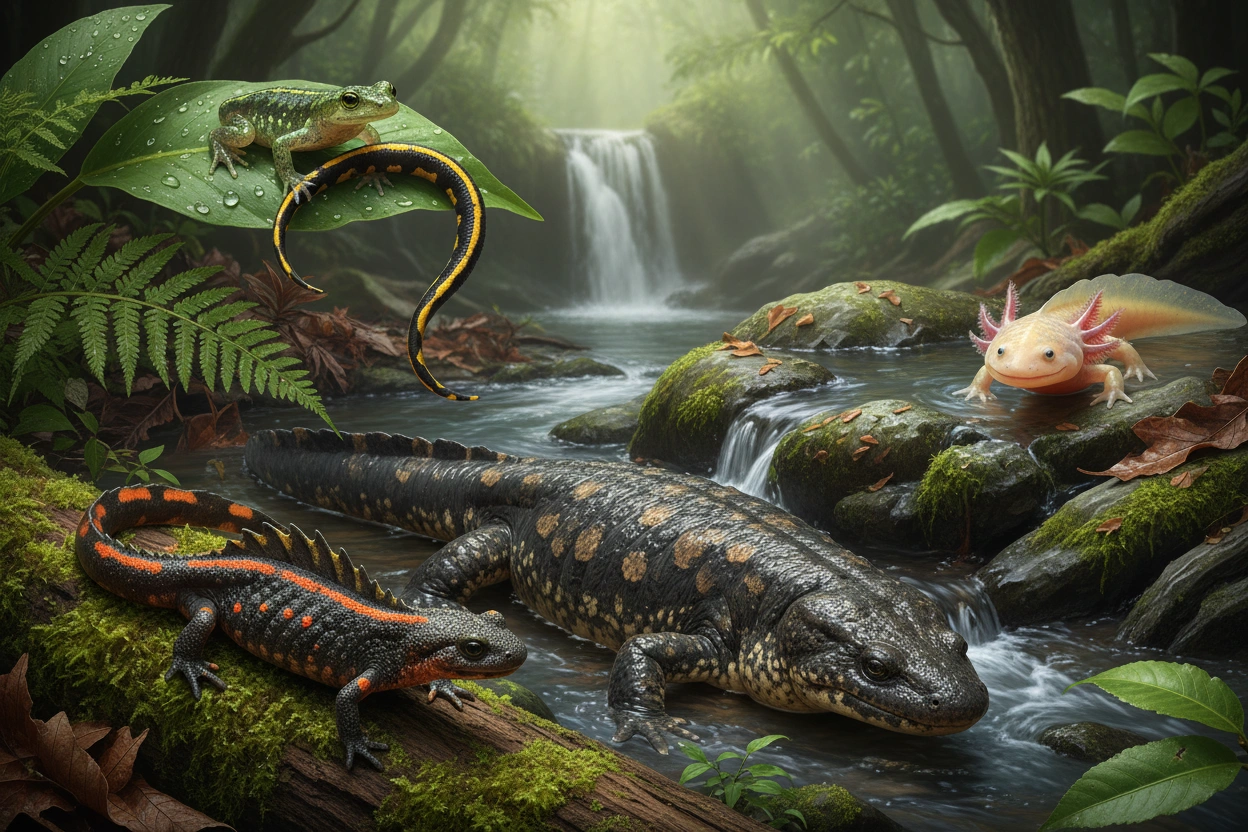
Amphibians are a fascinating group of animals that bridge the gap between terrestrial and aquatic ecosystems. Among the most intriguing members of this group are salamanders, which display a remarkable range of adaptations that allow them to thrive in diverse environments. Understanding the unique traits of different salamander types not only enhances our appreciation for these creatures but also underscores the importance of amphibian conservation efforts. In this article, we will explore various salamander types, their adaptations, and highlight top conservation initiatives that support amphibians worldwide.
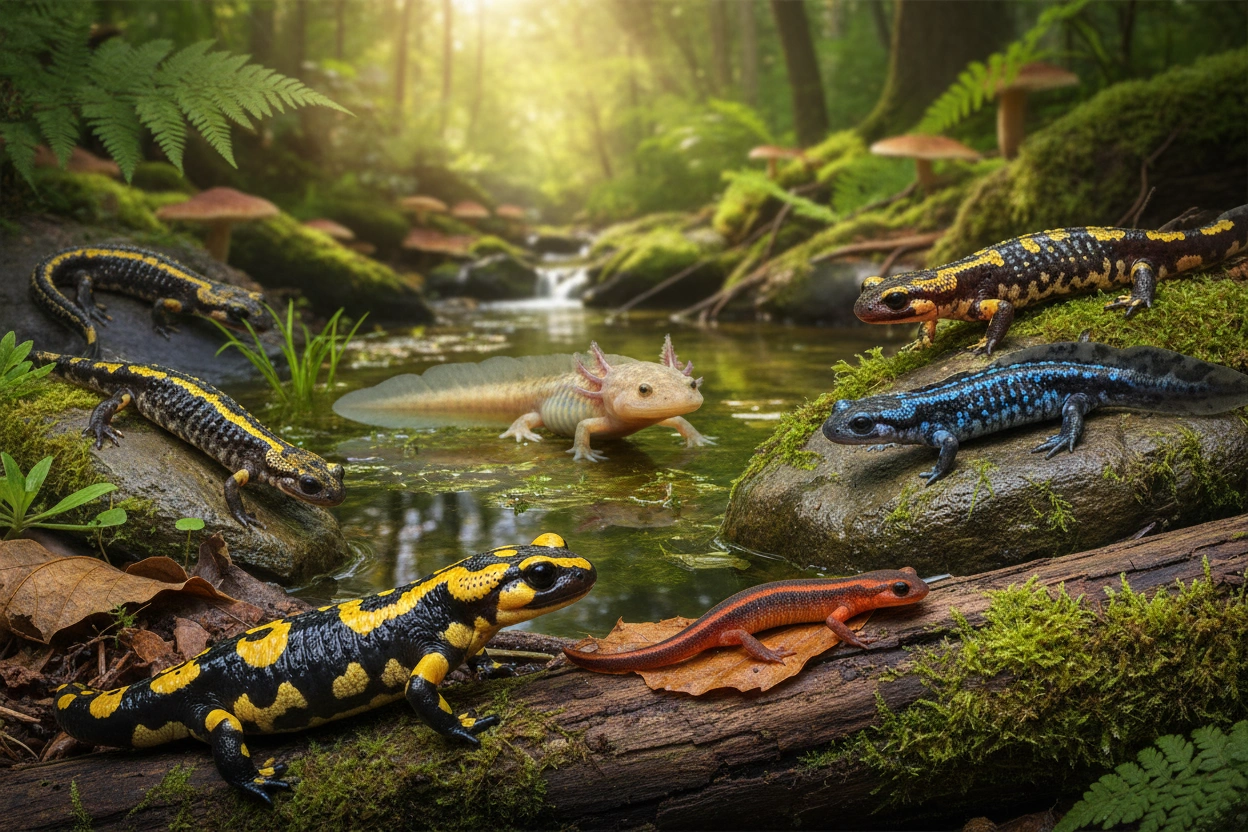
Salamanders belong to the order Caudata and are characterized by their slender bodies, long tails, and moist skin. They can be found in a variety of habitats, from forests and wetlands to grasslands and mountains. Here are some of the most notable types of salamanders:
The Eastern Red-Backed Salamander is a common species found in eastern North America. It exhibits two distinct color phases: the red-backed phase, which has a vibrant red or orange stripe along its back, and the lead-backed phase, which is entirely gray or black. This adaptability in coloration helps it blend into various environments, providing effective camouflage against predators.
The Axolotl is a unique salamander known for its ability to regenerate lost limbs and other body parts. Native to the lakes of Mexico City, it remains in its larval form throughout its life, a phenomenon known as neoteny. The Axolotl's adaptations include external gills, which allow it to absorb oxygen directly from water, making it well-suited for its aquatic habitat.
Recognizable by its striking yellow or white spots against a dark background, the Tiger Salamander is one of the largest terrestrial salamanders in North America. Its adaptations include a robust body and strong limbs, allowing it to burrow into the ground during dry periods. This behavior helps it retain moisture, crucial for its survival in varying climates.
The Spotted Salamander is another large species, typically found in deciduous forests across eastern North America. It features distinctive yellow or white spots on its dark body. One of its remarkable adaptations is its ability to migrate to breeding ponds during the spring, demonstrating a strong homing instinct. This migration is critical for the continuation of its species.
The Red Salamander is easily identified by its vibrant red coloration and black spots. This species thrives in moist environments, such as streams and swamps. Its adaptation to a diet primarily consisting of invertebrates enables it to play a crucial role in controlling pest populations in its ecosystem.
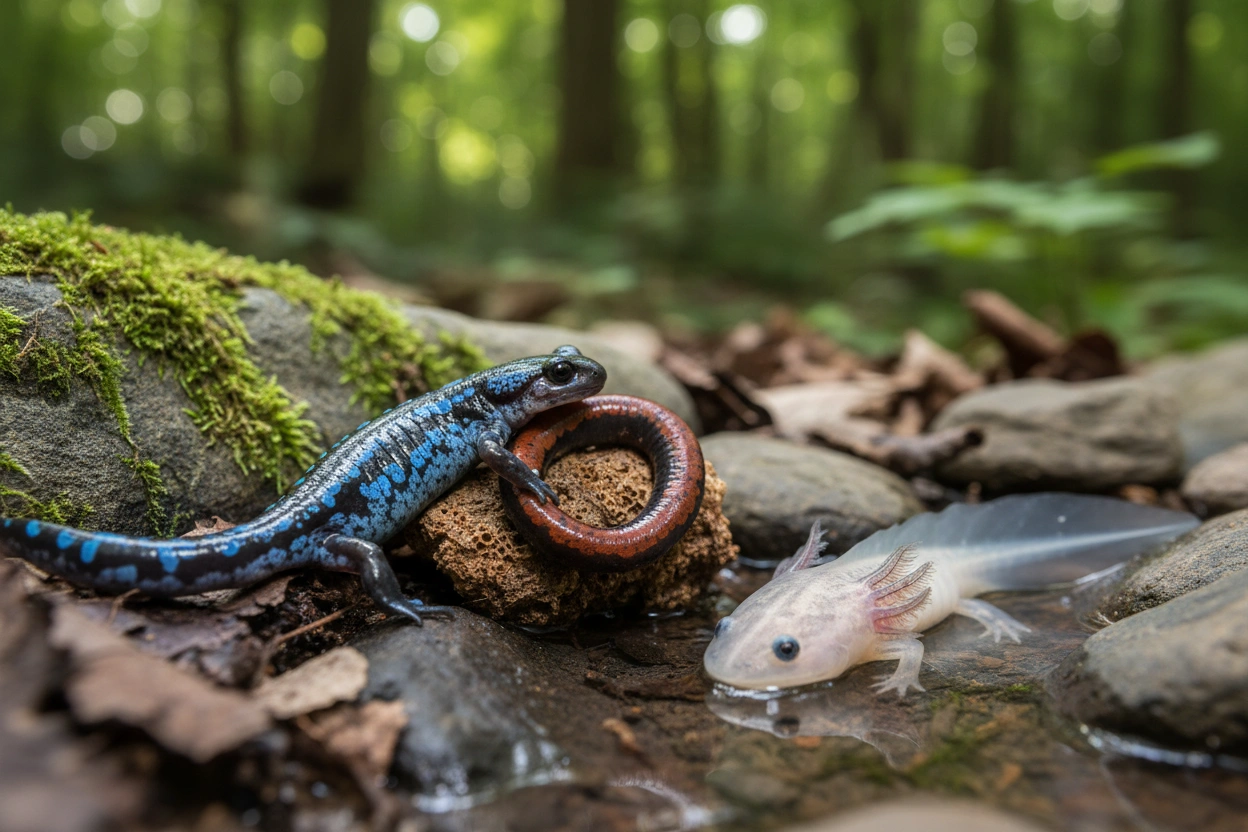
Salamanders exhibit a variety of adaptations that enhance their survival and reproductive success. These adaptations can be broadly categorized into physiological, behavioral, and ecological strategies.
Salamanders possess moist, permeable skin that allows for cutaneous respiration, enabling them to absorb oxygen directly from their environment. This adaptation is particularly beneficial in aquatic habitats, where they rely on water for respiration. Additionally, many species can secrete toxins through their skin as a defense mechanism against predators.
Salamanders often exhibit unique behaviors that enhance their survival. For example, some species, like the Eastern Red-Backed Salamander, engage in hiding behaviors during the day to avoid desiccation and predation. Others, such as the Axolotl, have adapted to remain in water throughout their lives, which influences their feeding and reproductive strategies.
Salamanders play vital roles in their ecosystems, acting as both predators and prey. They help regulate insect populations and serve as food for a variety of larger animals. Their presence is often an indicator of ecosystem health, as they are sensitive to environmental changes, including habitat destruction and pollution.

As amphibians face numerous threats, including habitat loss, climate change, and disease, conservation efforts are crucial for their survival. Here are ten notable amphibian conservation initiatives that support the protection of these vital species:
Habitat Restoration Projects
Many organizations focus on restoring wetlands and forests to provide suitable habitats for amphibians. This includes reforestation and the removal of invasive species.
Captive Breeding Programs
Captive breeding is essential for species at risk of extinction. Programs aim to breed amphibians in controlled environments and reintroduce them into their natural habitats.
Public Education and Awareness Campaigns
Raising awareness about the importance of amphibians and the threats they face is crucial. Educational programs target schools and communities to foster a sense of responsibility towards amphibian conservation.
Research and Monitoring
Ongoing research helps track amphibian populations and health. Monitoring programs assess the impacts of environmental changes and inform conservation strategies.
Legislation and Protection
Many countries have enacted laws to protect amphibian habitats and regulate activities that threaten their survival, such as pollution and land development.
Community Involvement
Engaging local communities in conservation efforts empowers individuals to take action. This can include citizen science projects that involve community members in monitoring amphibian populations.
Disease Management
Addressing diseases like chytridiomycosis, which has devastated amphibian populations, is critical. Research into treatments and preventive measures is ongoing.
Sustainable Land Use Practices
Encouraging sustainable agricultural and land use practices minimizes habitat destruction and promotes biodiversity, benefiting amphibians and other wildlife.
Wildlife Corridors
Creating wildlife corridors allows amphibians to migrate safely between habitats. These corridors help maintain genetic diversity and population stability.
Funding and Support for Conservation Organizations
Supporting organizations dedicated to amphibian conservation through donations or volunteer work can significantly impact their efforts.
Despite their fascinating nature, several misconceptions about salamanders persist. Understanding these can enhance our appreciation for amphibians.
While some salamanders possess toxic skin secretions, not all are harmful to humans. Many species have developed these adaptations as a defense against predators but are harmless to humans.
Salamanders are often mistakenly classified as lizards. However, they belong to a different biological order (Caudata) and have distinct anatomical features, such as moist skin and the ability to regenerate limbs.
Many salamander species are facing significant threats and are listed as endangered or vulnerable. Awareness of their conservation status is crucial for supporting efforts to protect them.
The study of salamanders offers valuable insights into the broader category of amphibians. Their unique adaptations of salamanders showcase the incredible diversity of this group and highlight the importance of preserving their habitats. By understanding the various types of salamanders and the challenges they face, we can better appreciate the role they play in our ecosystems.
The adaptations of salamanders are not only fascinating from a biological perspective but also critical for understanding their ecological roles. Conservation efforts aimed at protecting amphibians directly impact the health of ecosystems worldwide. The Banana Slug Club is committed to promoting awareness and supporting initiatives that benefit amphibians, including salamanders.
As you reflect on the unique adaptations of salamanders and their place in the amphibian family, consider how you can contribute to their conservation. Whether through education, support for habitat restoration, or participating in local conservation efforts, every action counts.
To learn more about how you can get involved and support amphibian conservation, visit Banana Slug Club. Your contribution can make a difference in preserving the unique adaptations of salamanders and ensuring their survival for generations to come.
Get free resources, early access to new features and updates.
No spam. Just fun educational emails!


.svg)
.svg)