Amphibians are a diverse group of animals that include frogs, toads, salamanders, and newts. These creatures are not only fascinating due to their biological adaptations but also because of their complex behaviors, particularly in mating rituals and communication. Understanding these behaviors provides insights into their ecology and the environmental challenges they face. In this article, we will explore the intricate mating rituals of amphibians, their communication methods, and the top conservation efforts to support these remarkable creatures.

Amphibians exhibit a wide range of mating behaviors that vary significantly across species. These rituals are often influenced by environmental factors such as habitat, climate, and the availability of resources. The mating process is not merely about reproduction; it involves a series of elaborate displays and interactions that ensure the survival of the species.
Amphibians are generally seasonal breeders, with most species timing their mating activities to coincide with specific environmental conditions. Factors such as temperature, humidity, and rainfall play critical roles in triggering reproductive behaviors. For example, many frog species emerge from hibernation in early spring when temperatures rise and ponds fill with water from melting snow.
These environmental cues ensure that amphibians reproduce at times when conditions are most favorable for the survival of their offspring.
The courtship rituals of amphibians are complex and often involve a variety of communication methods, including vocalizations, visual displays, and tactile interactions.
Vocalizations: Male frogs are particularly known for their vocal calls, which serve to attract females and establish territory. Each species has a unique call that can convey information about the male's health and genetic fitness. For instance, the common frog (Rana temporaria) produces a series of croaks that can be heard from considerable distances, indicating his presence to potential mates.
Visual Displays: Some species engage in elaborate visual displays during mating. The male poison dart frog, for example, may exhibit bright colors and specific movements to attract females. The vibrancy of their coloration can signal their health and genetic quality, making them more appealing to potential mates.
Tactile Interactions: Many amphibians also use physical touch as part of their mating rituals. Males may grasp females in a behavior known as amplexus, which helps ensure that fertilization occurs as the female lays her eggs.
These communication methods are vital not only for attracting mates but also for ensuring that mating occurs successfully, highlighting the importance of behavioral ecology in amphibian survival.
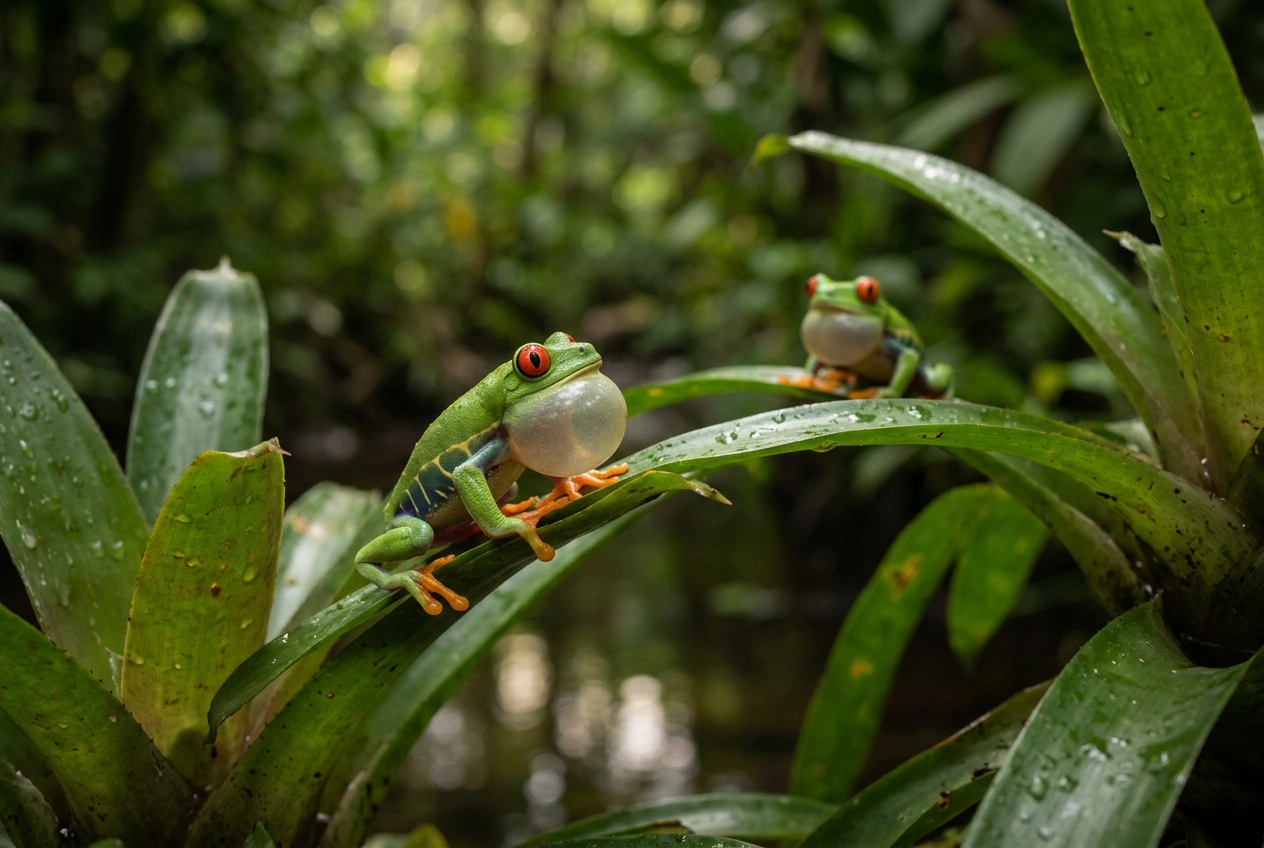
Communication among amphibians extends beyond mating rituals; it plays a crucial role in their survival and social interactions. The methods of communication can vary widely between species, but they often include auditory, chemical, and visual signals.
Auditory signals are perhaps the most well-studied form of communication among amphibians. These vocalizations serve multiple purposes:
Territorial Defense: Male amphibians use calls to establish territory and ward off rivals. The frequency and volume of calls can indicate the strength of the individual, deterring other males from encroaching on their space.
Attracting Mates: Calls are essential for attracting females. The quality of a male's call can influence female choice, with females often preferring males with more complex or louder calls.
Chemical signals, or pheromones, are another critical aspect of amphibian communication. These substances can convey information about an individual's reproductive status, health, and even stress levels.
Visual communication is also significant in amphibians, particularly during mating rituals. This can include:
Understanding these communication methods is crucial for amphibian conservation, as habitat degradation can disrupt these signals, impacting mating success and survival.

With the alarming decline in amphibian populations globally, numerous conservation efforts are underway to protect these essential species. Here are ten notable initiatives that focus on amphibian conservation:
Habitat Restoration: Efforts to restore wetlands and natural habitats are crucial for providing the necessary breeding and living conditions for amphibians. Organizations work to rehabilitate degraded areas, ensuring they can support diverse amphibian populations.
Captive Breeding Programs: Many species are now endangered, leading to captive breeding programs aimed at increasing population numbers. These programs often involve breeding in controlled environments and later reintroducing individuals into their natural habitats.
Education and Awareness Campaigns: Raising awareness about amphibian conservation is essential. Educational programs in schools and communities can help foster a greater understanding of the ecological roles amphibians play and the threats they face.
Legislation and Policy Advocacy: Advocating for policies that protect amphibian habitats and regulate practices that harm their populations is vital. This includes lobbying for stricter pollution controls and habitat protection laws.
Research and Monitoring: Conducting research on amphibian populations and their habitats is essential for developing effective conservation strategies. Monitoring programs help track population changes and the effectiveness of conservation efforts.
Community Involvement: Engaging local communities in conservation efforts can lead to more sustainable practices. Community-led initiatives often focus on habitat protection and restoration, benefiting both local wildlife and residents.
Reducing Climate Change Impact: Addressing climate change is crucial for the survival of amphibians. Initiatives aimed at reducing greenhouse gas emissions can help mitigate the impacts of climate change on amphibian habitats.
Controlling Invasive Species: Invasive species can threaten native amphibian populations. Conservation efforts often focus on controlling or eradicating these species to protect native amphibians.
Global Amphibian Conservation Alliance: This initiative brings together various organizations to coordinate global efforts in amphibian conservation, sharing resources and knowledge to tackle the crisis effectively.
Citizen Science Programs: Engaging the public in monitoring amphibian populations through citizen science initiatives helps gather valuable data while promoting awareness and appreciation for these creatures.
Supporting these conservation efforts is crucial for the survival of amphibians, which are vital indicators of environmental health.
The Banana Slug Club is dedicated to promoting awareness and education about amphibians and their habitats. By providing resources and support for conservation initiatives, the club plays a pivotal role in fostering a community that values and protects these remarkable creatures.
The Banana Slug Club offers various programs and initiatives aimed at educating the public about amphibians and their ecological significance. By participating in workshops, educational events, and community outreach, individuals can learn more about how to contribute to amphibian conservation.
If you are passionate about amphibians and want to make a difference, consider supporting the efforts of the Banana Slug Club. Whether through volunteering, participating in educational programs, or simply spreading awareness about amphibian conservation, every action counts.
To learn more about how you can get involved, visit Banana Slug Club today. Together, we can ensure that these fascinating creatures continue to thrive in their natural habitats.
Get free resources, early access to new features and updates.
No spam. Just fun educational emails!