A Guide to Common Amphibian Species and How to Identify Them

No items found.
Updated on:
March 10, 2026
Identifying Common Amphibian Species: A Comprehensive Guide
Updated on:
March 10, 2026

A Guide to Common Amphibian Species and How to Identify Them

Amphibians, a diverse group of vertebrates that includes frogs, toads, salamanders, and newts, play crucial roles in ecosystems across the globe. They serve as indicators of environmental health, contribute to pest control, and are integral to food webs. However, many amphibian species are facing severe threats due to habitat loss, climate change, and pollution. Understanding how to identify these creatures can foster a greater appreciation for their importance and inspire conservation efforts. This guide provides an overview of common amphibian species, their habitats, and effective conservation strategies.

Understanding Amphibians: Characteristics and Habitats

Professional image illustrating Understanding Amphibians: Characteristics and Habitats

Amphibians are unique among vertebrates due to their dual life; they typically begin their lives in water as larvae and transition to land as adults. This life cycle, known as metamorphosis, allows them to exploit different ecological niches at various life stages. Their skin is permeable, which aids in respiration and hydration but also makes them vulnerable to environmental changes.

Amphibian Classification

Amphibians are classified into three primary groups:

  • Anura (frogs and toads): Known for their jumping abilities, frogs have smooth skin, while toads typically have bumpy skin and a more terrestrial lifestyle.
  • Caudata (salamanders and newts): These species usually have elongated bodies and tails, with a preference for moist environments.
  • Gymnophiona (caecilians): These lesser-known amphibians resemble worms or snakes and are primarily subterranean.

Common Amphibian Habitats

Understanding amphibian habitats is crucial for identification and conservation. Common habitats include:
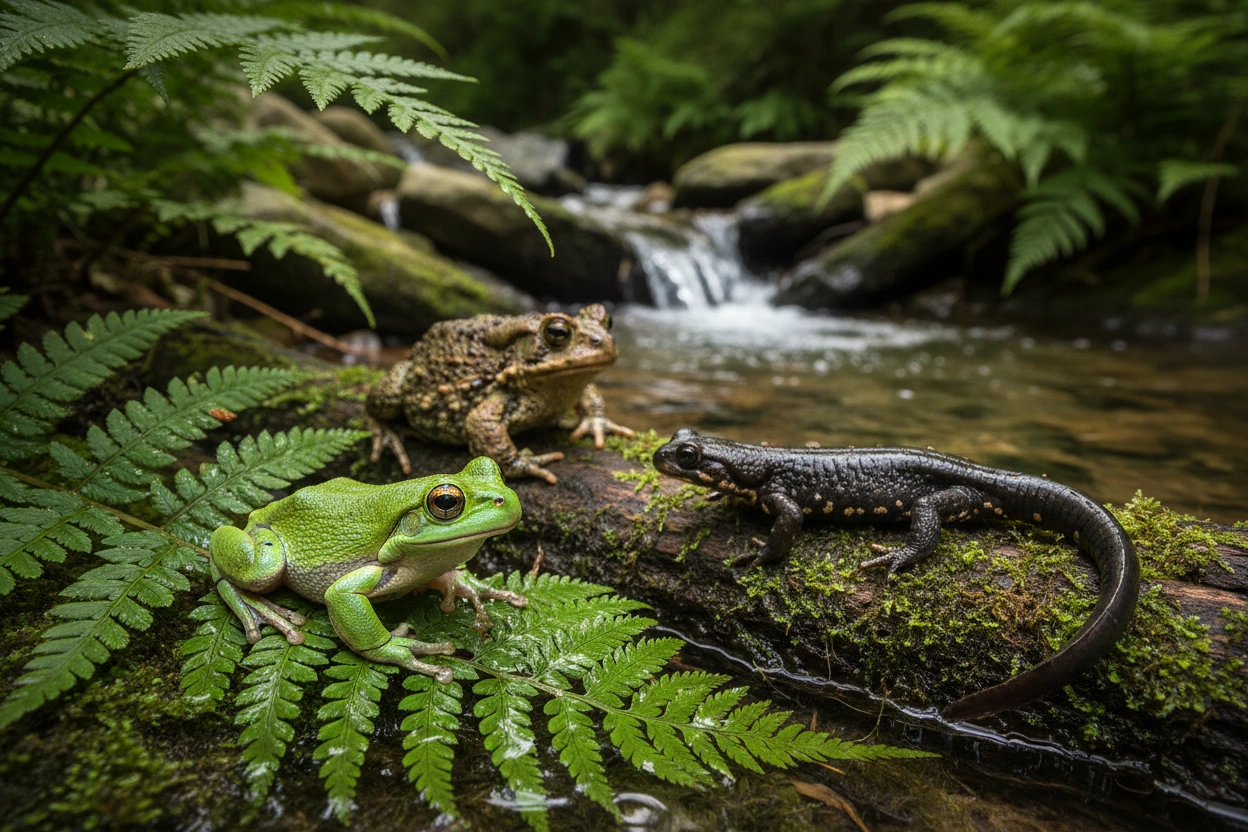
  • Freshwater bodies: Ponds, lakes, and rivers are vital for breeding and larval development.
  • Wetlands: Marshes and swamps provide rich biodiversity and essential resources.
  • Forests: Many amphibians thrive in moist forest environments, relying on leaf litter and undergrowth for cover.
  • Grasslands: Some species adapt to drier habitats but still require access to water sources.

Identifying Common Amphibian Species

Professional image illustrating Identifying Common Amphibian Species

Identifying amphibian species can be a rewarding experience. Here are some common species found across various regions:
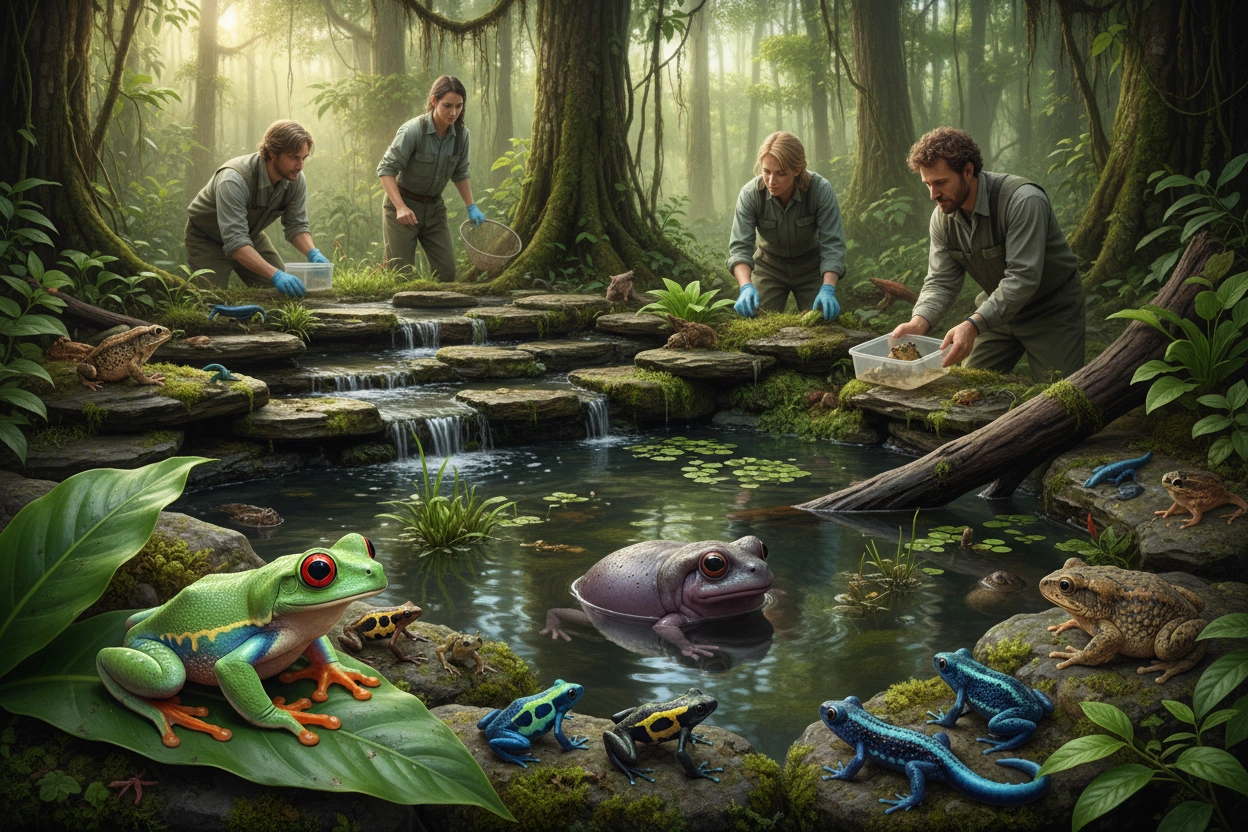
1. American Bullfrog (Lithobates catesbeianus)

  • Description: This large frog has a smooth, green or brown body with a characteristic deep croak.
  • Habitat: Prefers ponds, lakes, and marshes.
  • Identification Tips: Look for its large size and distinctive yellow throat.

2. Eastern Gray Tree Frog (Hyla versicolor)

  • Description: This small tree frog changes color from gray to green depending on its environment.
  • Habitat: Found in wooded areas and gardens near water.
  • Identification Tips: Listen for its trilling call, especially at night.

3. Red-backed Salamander (Plethodon cinereus)

  • Description: A small, slender salamander with a distinctive red or orange stripe down its back.
  • Habitat: Prefers moist, wooded areas with leaf litter.
  • Identification Tips: Look for it under logs or stones in damp environments.

4. American Toad (Anaxyrus americanus)

  • Description: Characterized by its warty skin and robust body, this toad is typically brown or gray.
  • Habitat: Commonly found in gardens, forests, and near ponds.
  • Identification Tips: Observe its distinctive vocalizations during mating season.

5. Northern Leopard Frog (Lithobates pipiens)

  • Description: This medium-sized frog has a green or brown body adorned with dark spots.
  • Habitat: Inhabits grasslands, wetlands, and agricultural fields.
  • Identification Tips: Note its characteristic hopping behavior and spotted skin pattern.

Top 10 Amphibian Conservation Efforts to Support

Professional image illustrating Top 10 Amphibian Conservation Efforts to Support

The decline of amphibian populations is alarming, making conservation efforts more critical than ever. Here are ten effective conservation initiatives that individuals and organizations can support:

  1. Habitat Restoration

    • Restoring wetlands and natural habitats to provide safe breeding grounds for amphibians.
  2. Pollution Control

    • Supporting policies and practices that reduce pollution in water bodies, which is vital for amphibian health.
  3. Invasive Species Management

    • Implementing strategies to control invasive species that threaten native amphibian populations.
  4. Climate Change Mitigation

    • Advocating for policies that address climate change, which poses significant risks to amphibian habitats.
  5. Research and Monitoring

    • Funding and participating in research that tracks amphibian populations and health, aiding conservation planning.
  6. Education and Outreach

    • Engaging in community education programs to raise awareness about the importance of amphibians and conservation efforts.
  7. Protected Areas

    • Supporting the establishment and maintenance of protected areas that safeguard critical amphibian habitats.
  8. Captive Breeding Programs

    • Participating in or supporting captive breeding efforts aimed at reintroducing endangered species into their natural habitats.
  9. Citizen Science Initiatives

    • Getting involved in citizen science projects that monitor amphibian populations and contribute to data collection.
  10. Advocacy for Legislation

  • Supporting laws and regulations that protect amphibians and their habitats at local, national, and international levels.

Common Mistakes in Amphibian Identification

Identifying amphibians can be challenging, and several common mistakes can lead to misidentification. Here are some pitfalls to avoid:

Overlooking Environmental Context

Many amphibians exhibit variations based on their environment. For instance, coloration may change depending on habitat. Always consider the ecological context when identifying a species.

Confusing Similar Species

Certain species, like frogs and toads, can appear similar. Familiarize yourself with key distinguishing features, such as skin texture and vocalizations, to avoid mix-ups.

Ignoring Behavioral Traits

Behavioral characteristics, such as calling patterns or movement styles, are crucial for identification. Pay attention to these traits, especially during mating seasons when calls are prominent.

The Importance of Amphibian Conservation

Amphibians serve as vital indicators of ecological health. Their permeable skin makes them particularly sensitive to environmental changes, making them excellent bioindicators for assessing ecosystem health. By understanding amphibians and supporting conservation efforts, individuals can contribute to preserving biodiversity and maintaining balanced ecosystems.

The Role of Citizen Engagement

Active participation in amphibian conservation can take various forms. From volunteering for local conservation organizations to simply observing and reporting amphibian sightings, citizen engagement is crucial. Programs that promote citizen science empower individuals to contribute meaningfully to conservation efforts.

Embracing Amphibian Awareness

As awareness of amphibian conservation grows, so does the opportunity for individuals to make a difference. By educating ourselves and others, we can foster a culture that values and protects these remarkable creatures.

The Intersection of Amphibian Conservation and the Banana Slug Club

The fight to conserve amphibians aligns closely with the mission of the Banana Slug Club. This organization emphasizes the importance of biodiversity and environmental stewardship, reflecting the critical role that amphibians play in our ecosystems. By joining initiatives that promote amphibian awareness and protection, individuals can contribute to broader conservation efforts.

As you embark on your journey to learn about amphibians, consider how you can support organizations like the Banana Slug Club. Whether it's through education, advocacy, or direct involvement in conservation efforts, every action counts.

To deepen your understanding of amphibians and engage in meaningful conservation work, visit Banana Slug Club and explore how you can contribute to preserving these vital species and their habitats.

Join the Banana Slug Club!

Get free resources, early access to new features and updates.
No spam. Just fun educational emails!