.svg)


We're working on this quiz!
Come back soon to test your knowledge about the
Come back soon to test your knowledge about the
Red eyed crocodile skink
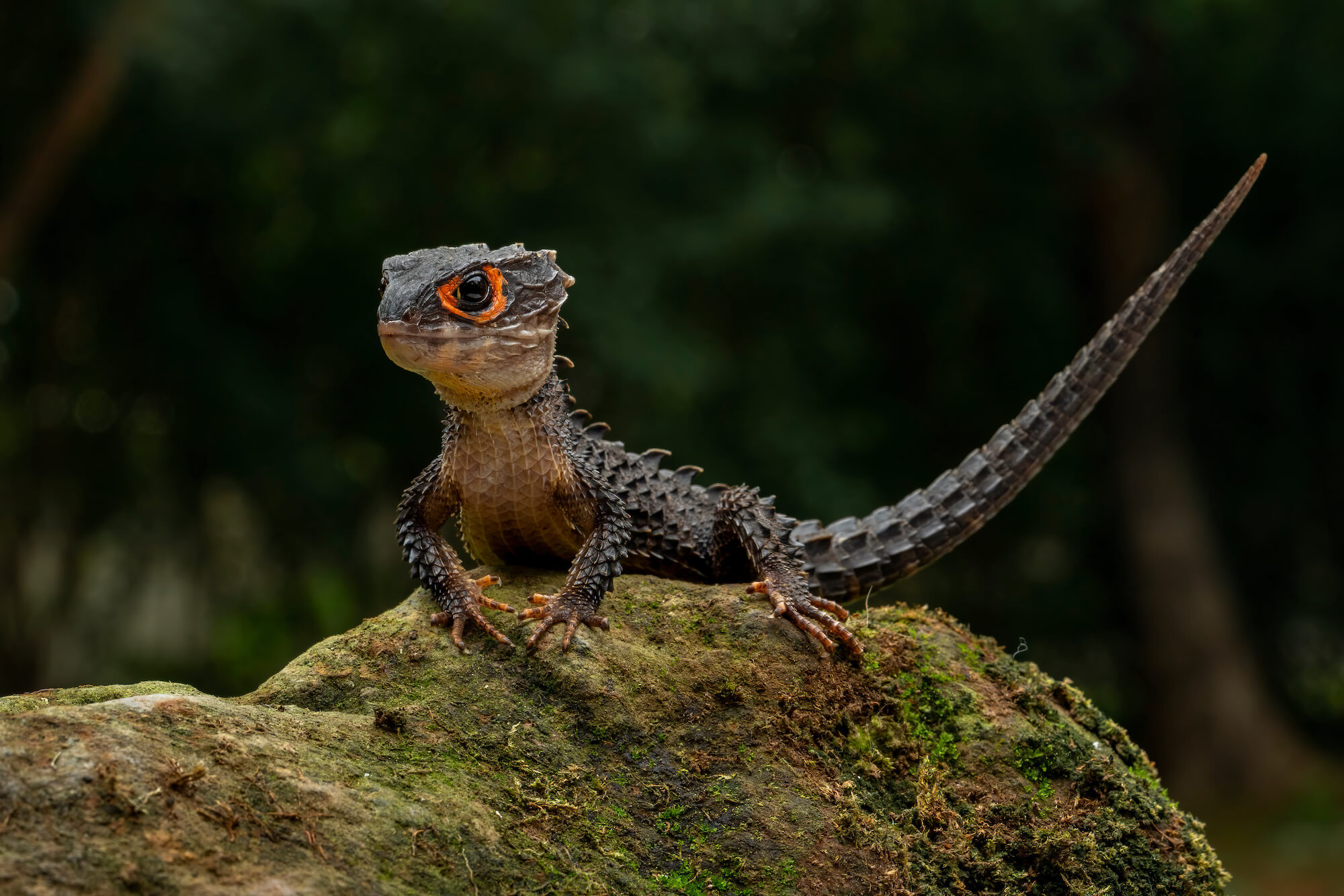

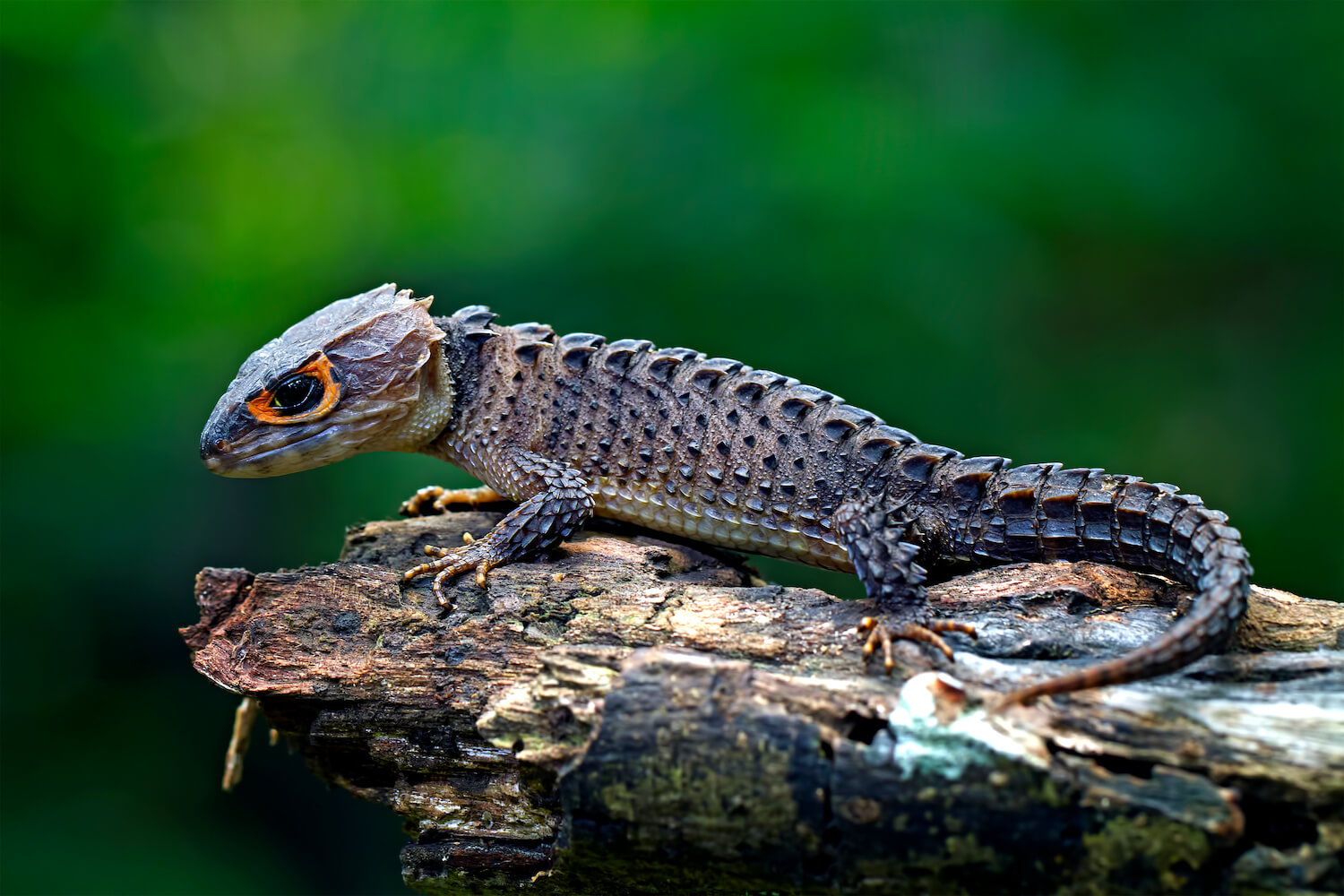
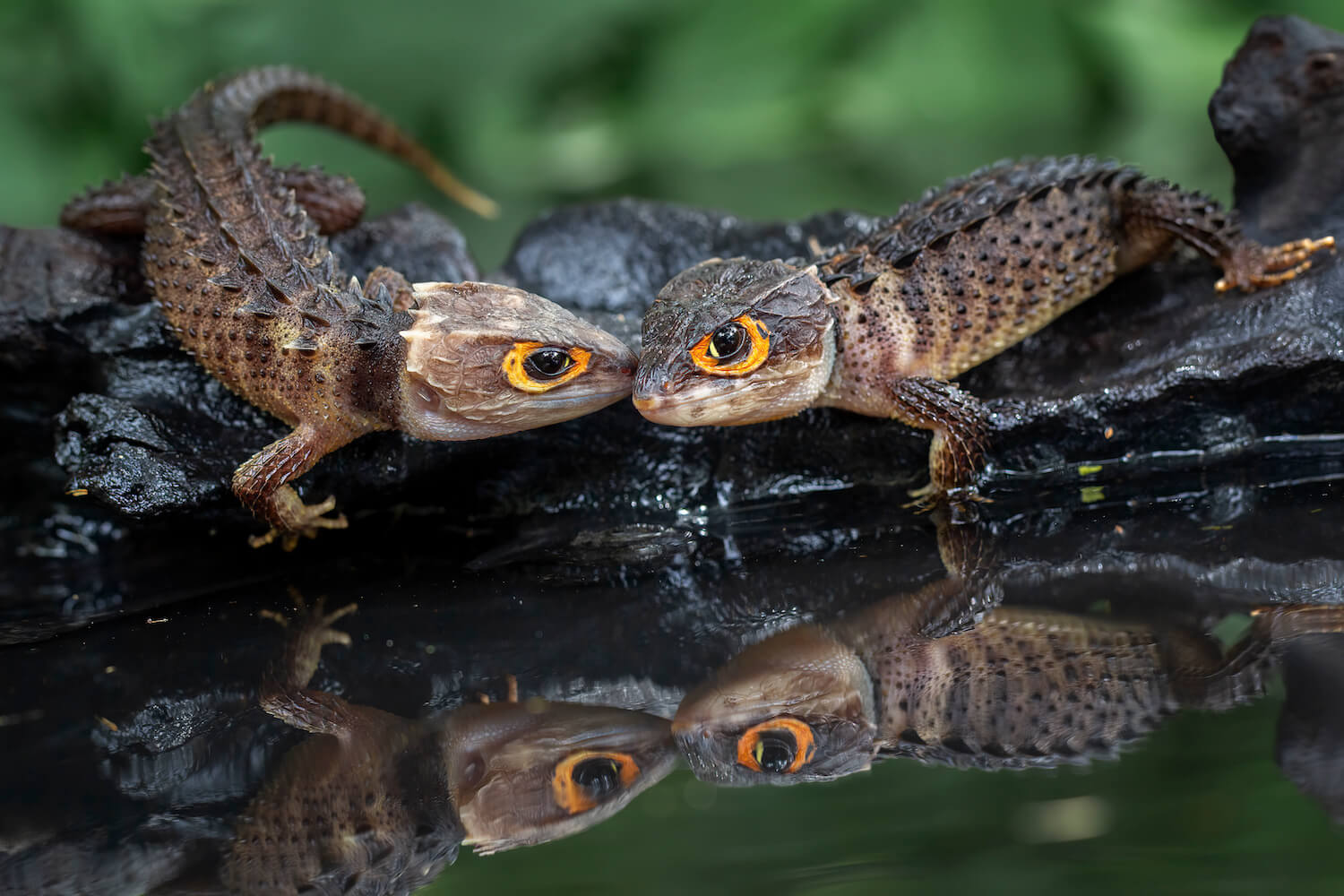

Red-eyed crocodile skinks are insectivores that eat a variety of small invertebrates. Their diet includes crickets, roaches, mealworms, waxworms, small earthworms, isopods (pill bugs), and other small insects. In the wild, they hunt through leaf litter on the forest floor, using their keen eyesight to spot prey. They're ambush hunters that wait patiently and then strike quickly when an insect comes close. Red-eyed crocodile skinks need to eat insects regularly, typically every 1-2 days. They prefer live, moving prey and may ignore insects that aren't wriggling around. In captivity, their food is often dusted with calcium and vitamin supplements to keep them healthy.
The red-eyed crocodile skink is a small, stunningly unique lizard that looks like it stepped straight out of a fantasy movie. Adults reach only 7-9 inches in length (including their tail) and weigh just 36-45 grams - about the weight of a few coins. Their most striking feature is the bright orange or red-orange scales surrounding their eyes, which stand out dramatically against their dark brown or black head. Their body is covered in four rows of raised, pointed scales running down their back that look remarkably like crocodile armor, giving them their common name. Their coloring is typically dark brown to black on top with a cream or tan belly, providing excellent camouflage among the leaf litter of their forest home.
Red-eyed crocodile skinks have fascinating behaviors that set them apart from many other reptiles. They're one of the few lizard species where both parents actively participate in caring for their offspring. Females lay only one egg at a time (occasionally two), and both parents take turns guarding it for the 60-90 day incubation period - a rare behavior in the reptile world. They're also surprisingly vocal for lizards, producing squeaking or barking sounds when frightened or stressed. When threatened, red-eyed crocodile skinks often freeze completely and may play dead, relying on their camouflage rather than trying to flee. They're shy, secretive animals that spend most of their time hiding and are most active during the low-light hours of dawn and dusk.
In recent years, red-eyed crocodile skinks have become increasingly popular as exotic pets due to their unique dragon-like appearance. However, they're not ideal for handling - they're easily stressed, prefer to hide, and may drop their tails or vocalize in distress when picked up. Wild populations are not extensively studied, but habitat loss from deforestation in New Guinea is a potential concern for their future. The pet trade has also put some pressure on wild populations, though captive breeding programs are becoming more successful. For now, red-eyed crocodile skinks are not considered endangered, but continued monitoring and habitat protection will be important to ensure these remarkable little dragons continue to thrive in their rainforest homes.
.jpeg)


.jpeg)
.jpg)

