.svg)


We're working on this quiz!
Come back soon to test your knowledge about the
Come back soon to test your knowledge about the
Red King Crab


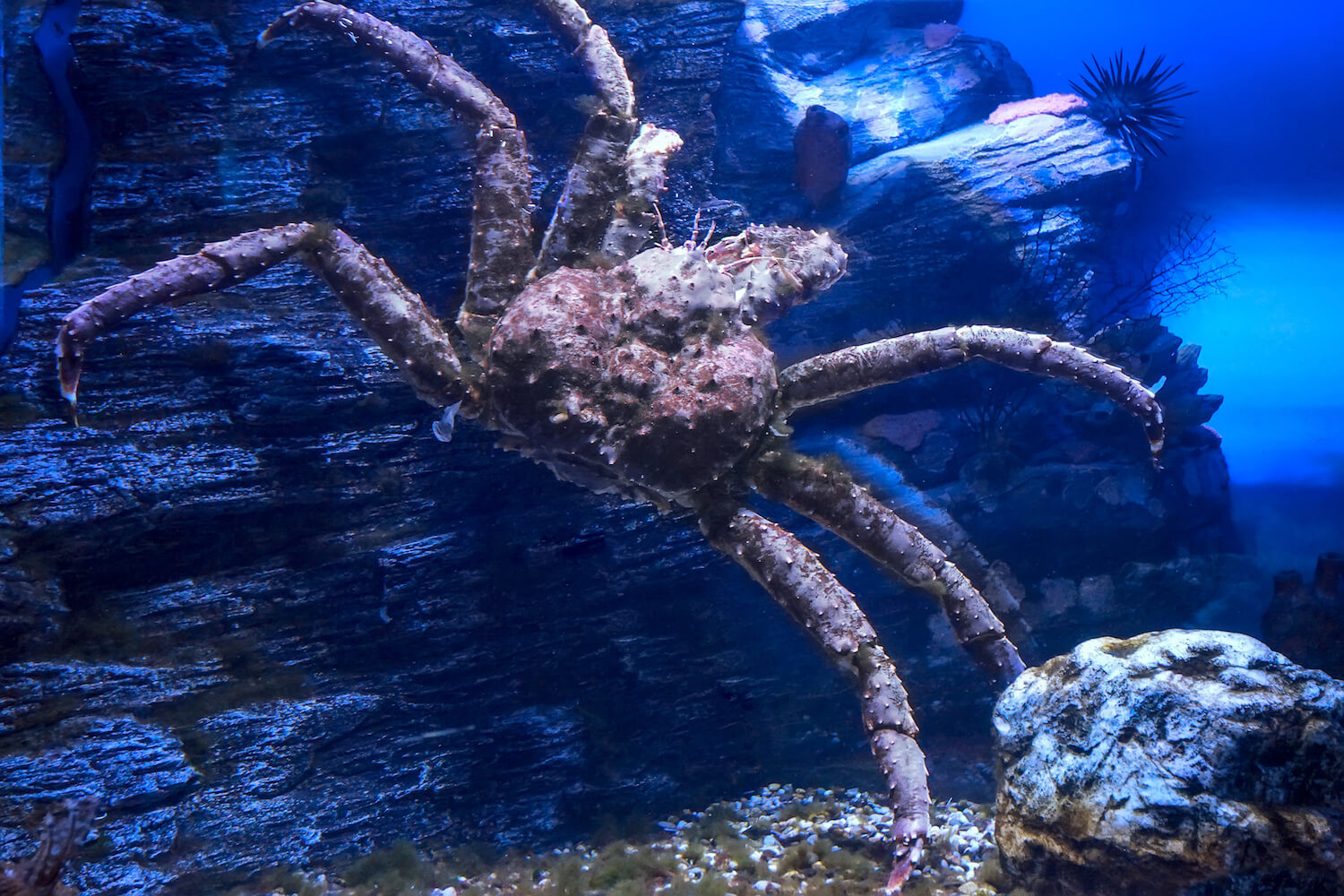
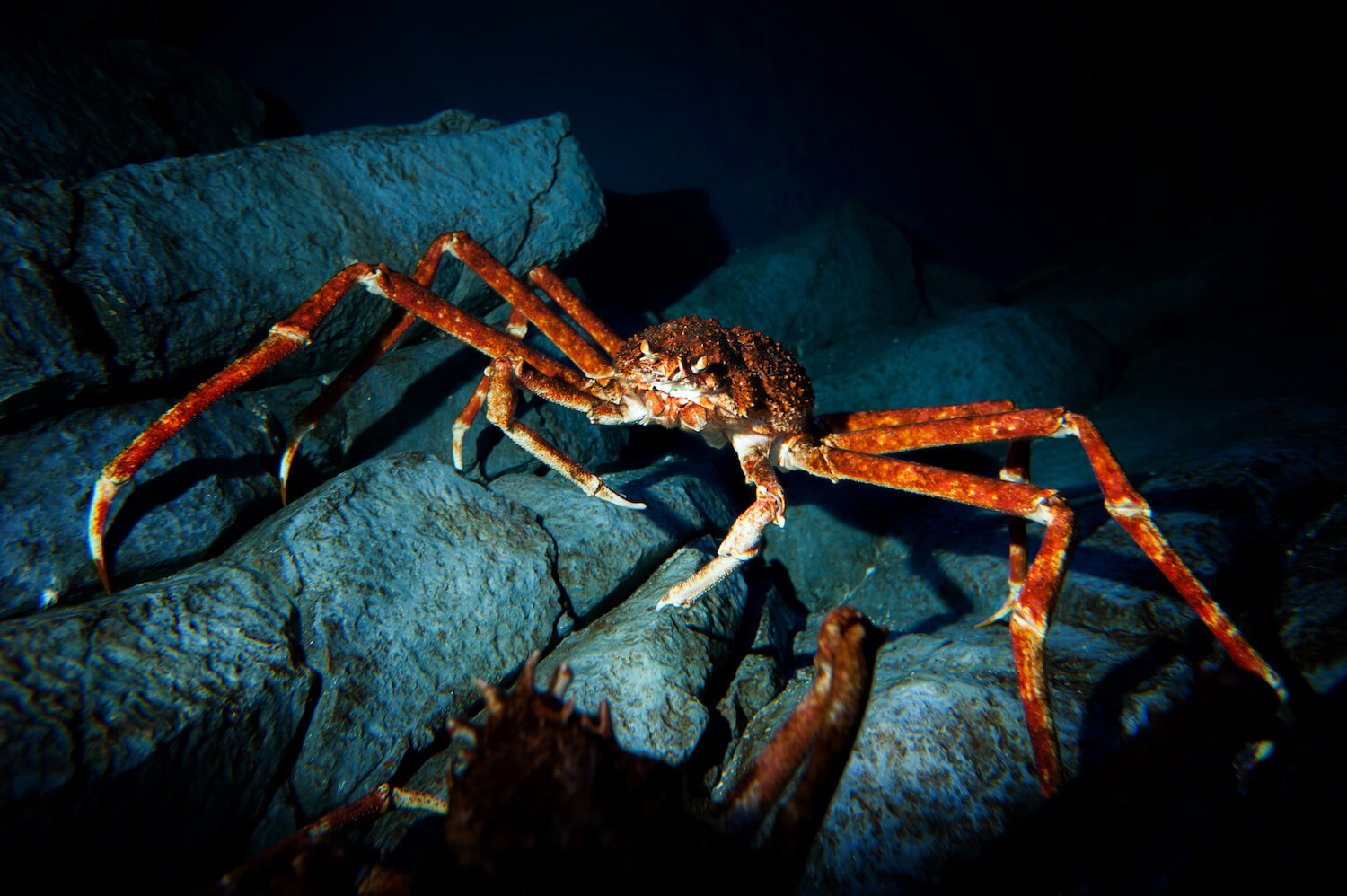
Red king crabs are found in the cold waters of the North Pacific Ocean, primarily around Alaska, Russia's Kamchatka Peninsula, Japan, and the Bering Sea. They prefer coastal waters and are most abundant along the continental shelf. In Alaska, major populations exist around the Aleutian Islands, Bristol Bay, Norton Sound, and the waters near Kodiak Island. Some populations have also been found in Norwegian waters after being introduced there in the 1960s.
The red king crab is a giant crustacean that lives in the frigid waters of the North Pacific Ocean. These remarkable creatures can grow enormous, with adult males reaching weights of 10-24 pounds (females are typically smaller at 5-10 pounds) and leg spans that can stretch nearly 6 feet across. Their hard outer shell, called a carapace, is bright red to burgundy in color and covered with protective spines. The underside is cream or yellowish-white. Despite being called "king crabs," they're actually more closely related to hermit crabs than true crabs - a fact scientists discovered by studying their anatomy.
Red king crabs have a fascinating life cycle and complex behavior. Females carry fertilized eggs under their tails for 11-12 months before the tiny larvae hatch and drift in ocean currents. The larvae go through several molting stages over about two months before settling on the ocean floor as juvenile crabs. Young crabs must molt (shed their shells) frequently as they grow - sometimes every few months when young, and once a year as adults. During molting, they're vulnerable to predators like Pacific cod, halibut, octopuses, sea otters, and even other king crabs. To protect themselves, juveniles often hide in rocky crevices and under ledges.
Red king crabs are incredibly important both ecologically and economically. They play a crucial role in ocean ecosystems as predators that help control populations of sea urchins, clams, and other bottom-dwelling creatures. Commercially, they're one of the most valuable seafood products in the world, supporting major fishing industries in Alaska and Russia. However, overfishing in the past led to strict regulations - Alaska now has limited fishing seasons, catch limits, and size restrictions to ensure populations remain healthy. Only adult male crabs above a certain size can be legally harvested, protecting females and young crabs so populations can continue to thrive.

.jpg)

